This article was created by
Kristiin Jets, e-Governance Academy
Share this article!

Small and medium-sized enterprises (SMEs) form the backbone of Montenegro’s economy. They account for 99% of all businesses, employ around 60% of the workforce and contribute approximately 60% of the country’s GDP. Yet despite their economic importance, SMEs remain among the most vulnerable targets of cyberattacks.
Research shows that 60% of SMEs fail to recover within six months of a cyber incident, often forcing them to close permanently. Financial losses from a single cyberattack can range from EUR 70,000 to EUR 130,000, a scale that many small businesses simply cannot absorb. Ultimately, this impact extends far beyond companies and affects the end users of SME services, all citizens of Montenegro.
To address this challenge, Montenegro-based NGO Secure, one of the KnowCyber grantees, implemented a project focused on improving cyber hygiene among SMEs and raising awareness across the wider public.
The project began with comprehensive quantitative research involving 350 SME employees across Montenegro, aimed at identifying real-world cybersecurity gaps and training needs. The findings revealed critical weaknesses:
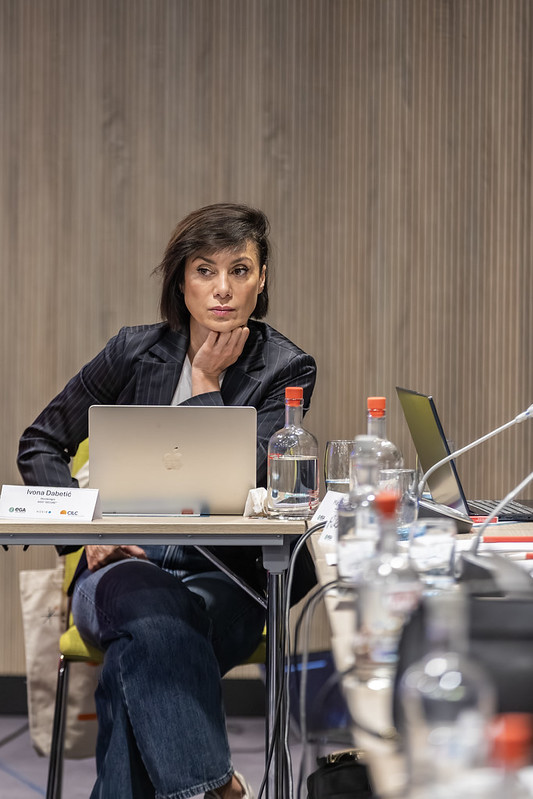
“These numbers clearly showed that cybersecurity was not being treated as a strategic business issue,” says Ivona Dabetic, President of the NGO Secure.
“Without awareness at management level, employees are left without guidance, procedures or protection,” she added.
Based on the research findings, NGO Secure designed a three-cycle training programme tailored to different roles and needs within SMEs:
“What surprised us most was how little management teams understood the importance of internal procedures and staff training,” Dabetic explains. “Cybersecurity cannot be delegated, it has to be embedded at leadership level.”
In total, 45 SMEs participated directly in the training programme. While this represents a fraction of Montenegro’s 60,000 SMEs, the project demonstrated how targeted intervention can create ripple effects across the economy.
To amplify impact, the project also delivered a national awareness and education campaign, translating research findings into accessible, practical guidance for businesses and citizens.
Through social media and outdoor communication, the campaign reached over 26,000 people, sharing concrete steps SMEs can take to protect their data, systems and customers. The outdoor campaign reached up to 200 000 people in two months.
Educational materials developed as part of the project continue to support wider learning and can be reused by businesses, institutions and the general public.
Participants reported significant improvements across key indicators, including phishing recognition, password management, incident reporting awareness and overall cyber hygiene. The average usefulness rating of the training reached 4.76 out of 5, reflecting strong satisfaction and practical value for SMEs.
“By strengthening SMEs, we are strengthening the entire Montenegrin economy. Cyber hygiene is clearly an economic necessity, not a luxury,” says Dabetic.
As a KnowCyber grantee, NGO Secure’s work demonstrates how evidence-based training and targeted awareness can reduce cyber risk, improve resilience and protect both businesses and citizens.
While the project has reached only a portion of Montenegro’s SME landscape, it has laid a strong foundation for future scaling. By investing in cyber hygiene today, Montenegro takes a crucial step toward a safer, stronger and more resilient digital economy.