This article was created by
Share this article!
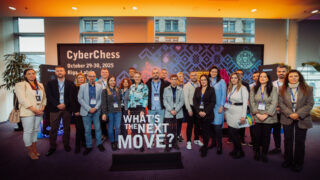
CyberChess 2025, one of the Baltic region’s leading cybersecurity conferences, took place last week in Riga, Latvia, attracting over 500 in-person participants and more than 5,000 online viewers. This year, e-Governance Academy’s (eGA) Western Balkan partners also took part of the event, marking another step in strengthening regional and cross-regional cybersecurity collaboration.
The conference brought together more than 50 speakers from nearly 20 countries, who shared their latest research, field experience, and insights on emerging cybersecurity challenges. Topics spanned across key domains, including:
Operational Technology (OT) security
Financial security and fraud prevention
Vulnerability discovery and responsible disclosure
AIin cybersecurity – risks and dependencies
Open-source intelligence (OSINT), threat intelligence, and attribution
For the Western Balkan participants, CyberChess served as a valuable platform to exchange knowledge, explore cooperation opportunities, and strengthen ties with peers across Europe.
“CyberChess conference was a great opportunity to meet colleagues from all around the world, to welcome them in Riga and to discuss the most pressing challenges and opportunities in the field of cybersecurity,” said Baiba Kaskina, General Manager of CERT.LV.
“Meeting with Western Balkan representatives enabled us to meet new faces and to learn about the newest developments in the region.”
“It was great that eGA could connect the Baltic and Western Balkan cybersecurity network experts by bringing Balkan professionals to the CyberChess Conference,” added Merle Maigre, Programme Director of Cybersecurity at eGA.
“For over a decade, the Riga CyberChess Conference has been a cornerstone cybersecurity event in Latvia, bringing together cybersecurity specialists, policymakers, internet and telecommunications providers, industry leaders, and enthusiasts. It remains a key platform for exploring emerging trends, addressing critical challenges, and showcasing innovations in cybersecurity.”
By linking experts from the Western Balkans and the Baltics, CyberChess 2025 once again demonstrated how knowledge exchange and collaboration across regions can advance collective resilience against evolving cyber threats.


